I'm honored! This blog, Better Than I Ever Expected: Sex and Aging, has been chosen by Aging Healthy as one of the "Top 50 Aging and Gerontology Blogs" -- and it's the only blog about sexuality on the list! Aging Healthy offers "resources and tidbits on the social and medical aspects of aging." I'm delighted that ageless sexuality has a place of importance there now.
Welcome to the readers of Aging Healthy who are now visiting this blog for the first time. Please see the "labels" list at the right with links to topics I've covered in the past. There's a lot here!
I hope that all of you who study gerontology and related topics will join me in recognizing how important healthy sexuality is throughout our lives, not just when we're young. Keeping and nurturing our sex lives can help shape our quality of life in later years.
Thank you, Healthy Aging!
Showing posts with label aging. Show all posts
Showing posts with label aging. Show all posts
If Not Now, When Do We Live Fully?
"Putting your own life/needs/emotions on hold can’t be healthy for you," I told someone yesterday, and it reminds me of how often I find myself saying that.
A reader writes that she has a sexless and even touchless marriage, but can't support herself financially so she's staying. A male friend of mine in his sixties can't decide whether his current relationship is right for him, so he doesn't decide, he just goes along. A reader in his fifties will start exploring relationships after he moves. A woman says she will feel sexier after she loses weight. A couple hasn't had sex for years but won't see a therapist because they think they should figure it out on their own.
I often ask people of our age who have put their own happiness and passions on hold, “If not now, when?”
If you’ve read much of my blog, you know that I lost my beloved husband, Robert Rice, to cancer last August. He was an artist, a dancer, a thinker, and a teacher to all who knew him. As long as he could stand upright, he painted in his studio every day, creating amazing art, yet always striving for that elusive best painting -- maybe his next. He painted some of his most magnificent work in his last two years.
“Do you feel like you’re living on borrowed time,” I asked Robert one morning as he pulled on his paint-splattered jeans and sweater.
“I AM living on borrowed time,” he told me. Then he kissed me and rushed off to tend his garden for a couple of hours before heading to the studio.
I’m making myself cry writing this, but I admired him (and admire him still) for always going towards his goals, his love for life and creativity, and his passion for love itself, even when he knew he was dying.
We all have a death sentence, we just don’t know when it is. As we age, though, we get many reminders of our mortality, some subtle (aches in new places, parts that don’t work 100% like they used to), some not subtle at all (a cancer diagnosis, a spinal or hip fracture, parts that don't work at all).
It seems to me that we have a responsibility to ourselves and to life itself to live fully, productively, and lovingly -- as long as we can.
As I reread this post, I realize that it's a lesson I have to relearn in my own life now as I emerge from the dark place of grief and make my way back to life, work, sunshine, and joy.
Thank you, Robert, for the lessons you taught me so well.


A reader writes that she has a sexless and even touchless marriage, but can't support herself financially so she's staying. A male friend of mine in his sixties can't decide whether his current relationship is right for him, so he doesn't decide, he just goes along. A reader in his fifties will start exploring relationships after he moves. A woman says she will feel sexier after she loses weight. A couple hasn't had sex for years but won't see a therapist because they think they should figure it out on their own.
I often ask people of our age who have put their own happiness and passions on hold, “If not now, when?”
If you’ve read much of my blog, you know that I lost my beloved husband, Robert Rice, to cancer last August. He was an artist, a dancer, a thinker, and a teacher to all who knew him. As long as he could stand upright, he painted in his studio every day, creating amazing art, yet always striving for that elusive best painting -- maybe his next. He painted some of his most magnificent work in his last two years.
“Do you feel like you’re living on borrowed time,” I asked Robert one morning as he pulled on his paint-splattered jeans and sweater.
“I AM living on borrowed time,” he told me. Then he kissed me and rushed off to tend his garden for a couple of hours before heading to the studio.
I’m making myself cry writing this, but I admired him (and admire him still) for always going towards his goals, his love for life and creativity, and his passion for love itself, even when he knew he was dying.
We all have a death sentence, we just don’t know when it is. As we age, though, we get many reminders of our mortality, some subtle (aches in new places, parts that don’t work 100% like they used to), some not subtle at all (a cancer diagnosis, a spinal or hip fracture, parts that don't work at all).
It seems to me that we have a responsibility to ourselves and to life itself to live fully, productively, and lovingly -- as long as we can.
As I reread this post, I realize that it's a lesson I have to relearn in my own life now as I emerge from the dark place of grief and make my way back to life, work, sunshine, and joy.
Thank you, Robert, for the lessons you taught me so well.


Speaking Up for "Pro-Aging"

Being pro-age is the antidote to anti-age marketing, proclaims Debra D. Bass in the St. Louis Post-Dispatch, 06/06/2009.
"Aging is not optional, so forgive me if I'm a little annoyed by the 'anti-age' marketing bandwagon," writes Ms. Bass. "...In response to the ridiculousness, I've adopted a pro-aging policy."
So have I! I relish aging, because -- let's face it -- the alternative is dying. Let's see, aging... dying... aging... dying -- is it even a fair fight to select the winner?
When Robert died -- far too young, just 71, and in the prime of his emotional life, his creativity, and his ability to love fully -- I wished he had been able to get old. Why do we fight it?
I knew a young (by my standards) man who was devastated by his oncoming 40th birthday. Loving his youth, good looks, and physical prowess, he kept saying, "I can't turn 40!" He died in a motorcycle crash right before turning 40.
Be careful what you say and believe, and instead of fearing and hating aging, embrace it.
I grew up always looking years younger than I was, a real problem in my childhood and adolescence, but not so bad as the decades swiftly passed. Now, at 65, I do believe I look my age (remind me to post a current photo), and I'm happily settled into this aging process and the emotional growth that goes with it.
Don't think I'm sitting back and letting my body fall apart: I dance nine or more hours a week, do an hour of Pilates twice a week, and aim for 10,000+ steps every day. (I wear an Omron pedometer everywhere, to the amusement of my friends.) I'm trying to redefine what aging looks like and feels like by staying physically and mentally fit and focused.
This blog is about sex and aging, and I firmly believe that how we feel about our own aging process affects everything else, including sex, relationships, the love we have to give, and our enjoyment of life. Robert and I gloried in our aging bodies. We saw wrinkles as badges of experience, and every tingly sensation we experienced together or apart was reason to exalt the joy (and face the challenges) of living in aging bodies.
Joan Baez's 96-yr-old mom wants 97 men next birthday
I enjoyed this quote from Joan Baez about her mother in the San Francisco Chronicle:
I'll bet she wanted 96 men this year instead of cupcakes!
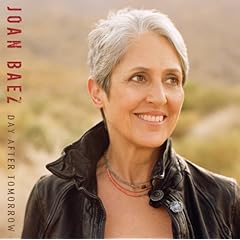
I couldn't find a photo of Joan Baez's mother -- or even her name -- but Baez herself sure looks good after 50 years in the music business:

Her latest album, recorded at age 67, is Day After Tomorrow, filled with the kind of mellow songs of spiritual awakening and social activism that we expect from Baez.

[She] just turned 96 and had a giant birthday party. She had 96 cupcakes and next year she wants to have 97 men.
I'll bet she wanted 96 men this year instead of cupcakes!
I couldn't find a photo of Joan Baez's mother -- or even her name -- but Baez herself sure looks good after 50 years in the music business:

Her latest album, recorded at age 67, is Day After Tomorrow, filled with the kind of mellow songs of spiritual awakening and social activism that we expect from Baez.
Uncovering/ Uncoloring My Hair
 It's time for me to let my gray (silver?) hair grow out, I decided last November. My hair stylist, Troy of Troy Michael Salons in Sebastopol, CA, has been helping me "transition" since then, letting my gray/silver emerge while the brown/blonde recedes. At my last appointment, he cut off most of the still-colored hair, revealing me as a 65-year-old, mostly gray/silver-haired woman. (Thank you, Dan Goldes, for the photos.)
 I'd wondered for years what color my hair would be if I stopped coloring it. Shimmering silver?All gray? Salt and pepper? Old looking?
When I wondered aloud to Robert, he examined my roots with an artist's eye and said, "I don't think you'd like it -- you'd look ten years older." He wouldn't mind the ten-years-older part, but he was sure I would, being in the public eye and representing zesty sexuality after sixty.
Then after Robert died, everything that mattered before no longer mattered. As I grieved, I found myself re-evaluating every decision, big and little, from whether I could say no to writing deadlines for a year (yes, I could) to whether I should continue coloring my hair.
Bottom line: we don't have the option to stay young. We can either get old, or we can die first. I wish Robert had been able to get old rather than die at 71. That brought it home for me that we only have these two options, which make looking younger than I am seem sort of silly. The point is that we can grow old with vigor, pride, and sensuality -- we don't have to pretend to be young.
I've always valued authenticity. My hair isn't brown with blonde highlights. It's ... I don't know yet, some combination of gray and brown, or maybe all gray. I always insist on telling the truth, so shouldn't I be showing the truth, too? I see women who look beautiful and radiant in their sixties, seventies, eighties, with snow white hair, or silver streaked, or any combination of their natural colors.
You could argue that authenticity doesn't hinge on hair color, any more than it hinges on whether we wear "shaper" bras or let our sagginess show, or whether we bother to get dressed or wear pajamas to the supermarket if we feel like it. We do put effort into looking good because it reveals how we feel about ourselves as well as how we want the public to see us.
And, truth be told, I don't feel brown-haired-with-blonde-highlights any more. I'm looking forward to shining silver.

August 2009 update: Here's my hair now:
Speaking of gray hair, see my review of Going Gray by Anne Kreamer. It's an interesting read if you're wondering what to do (or not do) about your hair color, looking at the social, psychological, aesthetic, even political implications.
I find it fascinating that the original, hardcover edition of Going Gray was subtitled, "What I Learned about Beauty, Sex, Work, Motherhood, Authenticity, and Everything Else That Really Matters," and the paperback reprint edition is subtitled, "How to Embrace Your Authentic Self with Grace and Style." I prefer the first subtitle. Which do you prefer?

Senior celebrities talk about sex... sort of
 I was surprised to see two celebrities of our generation talking about sex (in a roundabout way) in Parade (Dec. 21, 2008).
Dustin Hoffman, age 71, was interviewed by Jeanne Wolf, who writes,
In his latest film, the romance Last Chance Harvey, Hoffman plays a lonely guy who finds late-in-life love with Emma Thompson. And proving he still likes to be a bit inappropriate, he looks at me and says, “Don’t worry, there’s no big bedroom scene. We didn’t have enough money for the special effects to make me look great naked.”Objection, Dustin! We'd love to see you in a big bedroom scene about "late-in-life love"! Who decides what looking great naked means at our age -- not the youth stereotype, please. Anyone who wants to judge for yourself whether Dustin Hoffman looks great naked at 71, raise your hand....

In an article by James Brady in the same issue, Angela Lansbury, 83, says, “I don’t want to get married again. But I’d love to have a guy around.” I wish I could ask her how she means that!
I'm a Juicy Tomato!
 Many thanks to Susan Swartz for choosing me as one of her"Juicy Tomatoes": women over 50 who are role models of "ripe living."
Immodestly speaking, here's an excerpt from Susan's description of me:
JOAN PRICE, author of “Better Than I Ever Expected: Straight Talk About Sex After Sixty” is another mighty challenger of stereotypes. Her mission is to promote ageless sexuality, not only to make it possible and enjoyable but to banish what she calls “the ick factor,” the prejudice that anyone over 50 is and should only be having sex in their dreams.
Unabashed, articulate and funny, Joan is one of the leading go-to experts when the subject has to do with sex and romance for those beyond the young and hard-bodied. I first met her when she was teaching an exercise class at my gym and now she’s all over the place, as an author, speaker and dance instructor.
Her blog, Betterthanieverexpected, talks about all those things you thought you and your girlfriends only discussed after multiple glasses of wine – like sex toys and the little bottle of slippery stuff you keep in the bedside drawer. Joan, who has a lovely personal story to share about finding love, romance and passion in her 50s, knows of what she writes. Visit her at joanprice.com.
Susan Swartz is a northern California journalist, author and public radio commentator. She has been writing about women since the women's movement was new and she introduced to her readers a new "rising star in the women's movement" -- Gloria Steinem. One of Susan's more amusing claims to fame is that she is credited by the Oxford English Dictionary for inventing the term "bad hair day"!
Susan is the author of two books about "juicy living" based on interviews with women over 50 (some are way over 50!): THE JUICY TOMATOES GUIDE TO RIPE LIVING AFTER 50 and JUICY TOMATOES: Plain Truths, Dumb Lies and Sisterly Advice About Life After 50. Both are great gifts for the "juicy tomatoes" in your life!
A Love Letter to Aging Bodies and Faces
 Do you think aging has made you less attractive? Do you have difficulty seeing yourself or your partner as sexy and desirable?
Then it’s time to challenge your own as well as society’s perception that only young bodies and unlined faces are sexy and beautiful. We need to accept – no, celebrate! – our wrinkles and rejoice in all the pleasure these bodies can still give us.
Let's join together and practice rejecting society’s youth-oriented view of beauty, keeping ourselves fit so that we feel happy with our bodies, and keeping a loud, buoyant sense of humor!
I love my 71-year-old husband Robert’s face and body. I look into his vibrant blue eyes and I see the young man as well as the older man. The older man is no less sexy than the younger man must have been (I didn't know him then). In fact, he's more sexy, because he has learned how to live joyfully and love completely in ways that a young man can't know until he has lived a full life.
I look in the mirror, where new wrinkles seem to appear weekly. I try to walk my own talk, accepting my own face as I accept Robert's, telling myself these wrinkles are badges of living, laughing, and loving. I tell myself, this is the youngest I'll ever be from now on!
I asked my 103-year-old great aunt what it felt like to be more than a hundred. She said, “I’m the same person I always was.”
So are we. Rather than trying to deny our aging -- which is futile anyway -- let's celebrate it.

(Photos by Mitch Rice, Robert's son, on Robert's 71st birthday)
Ellen Goodman: "60 is the new 60"
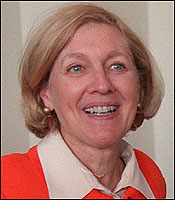
I loved Ellen Goodman's "Second Acts" column today about the Boomer generation. She wrote:
Baby boomers are the first generation that can look forward to such a lengthy and (fingers crossed) healthy stage of later life. They are as likely to be talking about what they want to do next as about where they want to retire. Never mind all those declarations that 60 is the new 40. In fact, 60 is the new 60.
"60 is the new 60"! So often the media stereotypes us as a generation trying to recapture youth with every decision, activity, and cosmetics purchase. Most of us, though, aren't trying to pretend we're not aging -- rather, we're applying our experience and the wisdom that comes with it to new endeavors, new life decisions, new causes. As Goodman says, we're reinventing this stage of life.
This applies to our sexuality, too. If we look deeply, we realize we can't recapture sex as it was at 40 -- but it can be something better! Sex at 60 (or 70, or 80) includes so much more self-knowledge, communications skill, and acceptance of ourselves and our partners than we had at 40. This emotional growth lets us adapt to and overcome the physical challenges. I could go on and on (and I already did, in Better Than I Ever Expected: Straight Talk about Sex After Sixty), but I'll pause because I'd like to hear what you have to say about this topic.
Leap! by Sara Davidson
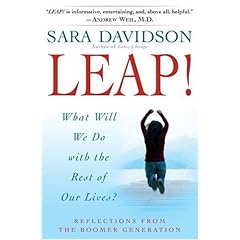 I thoroughly enjoyed reading Leap! What Will We Do with the Rest of Our Lives by Sara Davidson. Davidson reflects on aging, sex, love, bodies, career, community,spirituality, and world view and interviews dozens of other Boomers about their lives and views.
Many of her interviewees were well known during when the older Boomers were coming of age, such as Jane Fonda, Tom Hayden, Paul Krassner, Carly Simon, Gloria Steinem, Cheryl Tiegs, Ram Dass, and Andrew Weil. Others lived less in the public eye, but contributed vitally to the arts, healthcare, spirituality,and education.The insights -- both Davidson's own and those of her interviewees -- are thought provoking and fascinating.
"The Second Sexual Revolution," the chapter about "sex in the master years," is funny, real, and poignant. "How can sex feel more intense and expansive at this time than when we had raging hormones and oculd climax without effort?" she asks. "I would assert that we've become more complex, richened with sorrow and joy, and that there's more to us -- we bring more, release more, savor more."
Some people have criticized the book for being too much about celebrities and too little that applies to rest of us. I disagree. Learning how the people who helped to shape our world view decades ago are doing now, what they're thinking, how they look back and forward, how they cope with their own aging in a world that, in most cases, has moved past their contributions, is fascinating and valuable.
New England Journal of Medicine: Seniors having sex despite "bothersome problems"
When the news splashed all over the media today that older adults are, indeed, having sex, my first reaction was to laugh and say, "Duhhh!" The idea that senior sex is alive seemed to me as much a news story as the revelation that most people find feet at the end of their legs!
But there was much more to the story. "A Study of Sexuality and Health among Older Adults in the United States," published today in the New England Journal of Medicine, was a major study of 3005 U.S. adults (1550 women and 1455 men) 57 to 85 years of age which revealed some fascinating facts and a few surprises:
When I give workshops and talks, both women and men frequently bring up physical problems that affect their sexuality and want me to provide a solution. I always say, "Please get a diagnosis from your doctor." I emphasize that the problem may be caused by retreating hormones, or by an underlying health condition that you don't know you have, or a medication, or interactions of medications. You can't treat a problem until you know what's causing it.
As the NEJM article states,
I invite your comments!
But there was much more to the story. "A Study of Sexuality and Health among Older Adults in the United States," published today in the New England Journal of Medicine, was a major study of 3005 U.S. adults (1550 women and 1455 men) 57 to 85 years of age which revealed some fascinating facts and a few surprises:
The majority of older adults are sexually active and regard sexuality as an important part of life. The prevalence of sexual activity declines with age, yet a substantial number of men and women engage in vaginal intercourse, oral sex, and masturbation even in the eighth and ninth decades of life.
The frequency of sexual activity reported by sexually active older adults (age 57+) is similar to the frequency reported among adults 18 to 59 years of age.
The study reported that 78% of men 75 to 85 years of age, as compared with 40% of women in this age group, had a spousal or intimate relationship. Since women live longer, and on average, older men marry younger women, this disparity can be accounted for by the lack of available men for the older single women.
The sexually active people in the oldest age group interviewed -- 75 to 85 years of age -- reported having sex at least two to three times per month, and 23% reported having sex once a week or more.
About half of the sexually active men and women reported at least one "bothersome sexual problem," and almost one third reported having multiple problems. The women's most prevalent sexual problems were low desire, difficulty with vaginal lubrication, inability to climax, finding sex not pleasurable , and pain, usually during entry. The most prevalent sexual problems for men were erectile difficulty (14% of all men interviewed reported using medication or supplements to improve sexual function), lack of interest in sex, climaxing too quickly, anxiety about performance, and inability to climax.
About one quarter of sexually active older adults with a sexual problem reported avoiding sex as a consequence.
Most surprising, given the extent of these problems that prevented sex from being satisfying or pleasurable, was this fact:Only 38% of men and 22% of women reported having discussed sex with a physician since the age of 50.
The study suggests that the reasons for poor communication include the unwillingness of both patients and physicians to talk about sex and the gender and age differences between patients and their physicians.
Negative societal attitudes about women’s sexuality and sexuality at older ages may also inhibit such discussions.
When I give workshops and talks, both women and men frequently bring up physical problems that affect their sexuality and want me to provide a solution. I always say, "Please get a diagnosis from your doctor." I emphasize that the problem may be caused by retreating hormones, or by an underlying health condition that you don't know you have, or a medication, or interactions of medications. You can't treat a problem until you know what's causing it.
As the NEJM article states,
Sexual problems may be a warning sign or consequence of a serious underlying illness such as diabetes, an infection, urogenital tract conditions, or cancer. Undiagnosed or untreated sexual problems, or both, can lead to or occur with depression or social withdrawal. Patients may discontinue needed medications because of side effects that affect their sex lives, and medications to treat sexual problems can also have negative health effects, yet physician–patient communication about sexuality is poor.
I invite your comments!
Village Voice: Knockin' Vintage Boots
 "People are living longer, healthier lives so why shouldn't their sex lives keep on going? And why are we so afraid to imagine that they do?" writes Tristan Taormino in "Knockin' Vintage Boots: Golden girls get their groove on past 60," which appeared May 22, 2007 in the Village Voice.
 I'm quoted in this section:
.... "At what age do you plan to retire your genitals?" That's what Joan Price asks those who consider sexy seniors "icky." Price, author of Better Than I Ever Expected: Straight Talk About Sex After Sixty, says, "The main misconception is that seniors are either asexual, pathetic, or ludicrous because they're still interested in sex." She was so frustrated with the lack of positive images and information, she wrote a book about what she calls "ageless sexuality." Price tackles a myriad of subjects from serious issues like dealing with painful intercourse to spicy stories of threesomes.
Price's book and accompanying blog, [Betty] Dodson's work, and [Deirdre] Fishel's documentary have all kick-started a much needed dialogue. They not only prove that seniors do in fact have fulfilling sex lives, they can also empower older folks to get busy.
However, there is a serious lack of resources for the complex sexual issues facing people over 60, including illness and disability, hormonal changes, a decrease in libido and arousal, and the effect of common medications, not too mention coping with major changes to the vagina post-menopause, including dryness, atrophy, and a thinning of the tissue that can cause tearing, discomfort, and pain.
Taormino quotes Betty Dodson as saying, "Sex is such an important part of intimacy and bonding, of touching and feeling connected with a partner, of accepting our bodies and the wonderful physicality of which we're capable." Exactly!
Do you agree?
What is Sexual Desire? How does it change with age?

“What is sexual desire, and how do you know you’re feeling it?”
Natalie Angier explored that question in "Birds Do It. Bees Do It. People Seek the Keys to It," published in the New York Times on April 10, 2007. This exploration of sexual desire concluded that although sexual desire is universal, what turns us on (and how we know we're turned on) is as "quirky and personalized as the very chromosomal combinations that sexual reproduction will yield."
The article says,
For researchers in the field of human sexuality, the wide variance in how people characterize sexual desire and describe its most salient features is a source of challenge and opportunity, pleasure and pain. “We throw around the term ‘sexual desire’ as though we’re all sure we’re talking about the same thing,” said Lisa M. Diamond, an associate professor of psychology at the University of Utah. “But it’s clear from the research that people have very different operational definitions about what desire is.”
I suggest that not only are our reactions varied and individual, but they vary even more as we age. Certainly I would have answered the opening question differently thirty years ago. I would have said, "Sexual desire is a driving urge of attraction. I feel tingling in my genitals, and a feeling of physiological hollowness yearning to be filled. I fantasize touching my lust object, kissing him, discovering what he looks like, smells like, what noises he makes, how he makes love."
Today, at age 63, I'd answer differently: "Sexual desire is a yearning for intimacy, for touch, for bonding with my beloved man.I fantasize arousing him, connecting with him, becoming joined in intimacy and ecstacy. It is both physical and emotional, though without the electric arousal I used to feel -- that takes much more warm-up."
What about you? how would you define and describe sexual desire now, compared to when you were younger?
If you'd like to answer Richard A. Lippa's survey on sexual desire, which is mentioned in the NYT article, click here.
Dr. Ruth: Teach your lover what you need
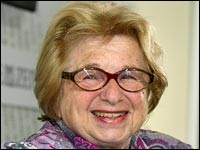
Did you hear Dr. Ruth Westheimer talking about "Sex, Humor and Happiness" on NPR's Morning Edition April 24, 2007? If you missed it, you can listen to it here. Dr. Ruth's latest book is Dr. Ruth's Sex After 50: Revving Up Your Romance, Passion & Excitement!
Dr. Ruth, age 78, says that despite the cultural changes in sexual awareness and knowledge, she still gets asked all the same questions, and she would like women to be more open about communicating their needs to a lover. "Even the best lover can't bring a woman to orgasm if she doesn't teach him what she needs," she says.
That's expecially true as we get older. Women who have been in long term, joyful, sexy relationships with partners who knew exactly how to please them sometimes tell me that they just aren't responding the way they used to, even when a partner is doing exactly what used to send them into orbit. They worry that maybe they aren't interested in sex any more, and perhaps they should settle into a comfortable but sexless love life.
That might be fine, if both partners would be happy with that (ah, there's the rub!). But many women and men who talk me express that they really miss the heightened connection with their partner, the electrified responses they used to feel to his or her touch, and the crashing waves of release. And they miss the eager joy of anticipating sex. As one woman told me, "I want my sweet tooth back."
So how do we get that back, if we've lost it? First, we need to learn what these new, aging bodies need. We need to let go of the old "this used to work!" and learn what works now, exploring both alone and with our partner. Then when we understand better what elicits our responses -- what kind of touch, what kind of ambience, whatever it is for us -- we need to communicate this clearly, kindly, and helpfully to our partner.
I know I've just brushed the surface of this topic. We'll keep talking about this.
How Old Are They Now?
 Sophia Loren — 73 years old this year, and still radiant and sexy. (I don't know how old she was in this photo, but the last I saw her on a TV talk show, she looked fabulous.)
 Thank you, Frank Kaiser of Suddenly Senior, for compiling this list of silver screen women who "found their way into our testosterone-laden high school hearts" at the drive-in and their approximate ages in 2007:
Annette Funicello — 65
Julie Christie — 66
Ann-Margret — 66
Elke Sommer — 67
Jill St John — 67
Stella Stevens — 70
Ursula Andress — 71
Julie Andrews — 72
Brigette Bardot — 73
Barbara Eden — 73
Debra Paget — 74
Joan Collins — 74
Julie Newmar — 74
Kim Novak — 74
Debbie Reynolds — 75
Liz Taylor — 75
Mamie Van Doren — 76
Angie Dickenson — 76
Leslie Caron — 76
Carroll Baker — 76
Rita Moreno — 76
Jean Simmons — 78
Jane Powell — 78
Shirley Temple — 79
Gina Lollobrigida — 80
Patti Page — 80
Esther Williams — 82
Doris Day — 83
Kathryn Grayson — 85
Gale Storm — 85
Kay Starr — 83
Jane Russell — 84
Lena Horne — 88
Marilyn Monroe would have been 81 this June 1st.
Women, what male stars do you remember idolizing and/or fantacizing about in your youth? If you know how old they are now, do tell!
My latest column for Suddenly Senior, "Safe Sex for Seniors: Tips for NOT getting a gift that lasts a lifetime," is now online . Check it out!Gloria Steinem: Doing Sixty & Seventy
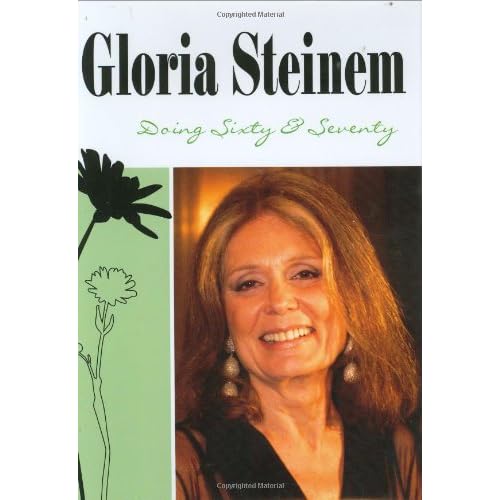
I was excited to see that Gloria Steinem has written a new book about aging, titled Doing Sixty & Seventy, and eagerly ordered it. When I saw the book -- just 68 pages long and printed in a font about three times normal size, I felt cheated. It's not a "book" -- it's a series of two essays published in hard cover. Once I got past that realization and read the essays, I was glad that I had.
Steinem, one of the most influencial feminist/activists of our time, was the founder of Ms. magazine. She became an inadvertent spokesperson for aging issues after a reporter said to her on her fortieth birthday, "You don't look forty."
Her widely quoted reply: "This is what forty looks like. We've been lying for so long, who would know?"
Steinem is now seventy-plus, and still radical. In fact, she claims that women get more radical as they age. This book includes her essay, "Doing Sixty," plus "Into the Seventies," a preface (which is actually an additional essay) looking back twelve years after writing "Doing Sixty."
Some tidbits from these thought-provoking essays:
"I used to joke that I thought I was immortal and this caused me to plan poorly."
"It was only after I'd become an old lady myself that I lost the habit of imposing my sentimental interpretation on old people."
"For women especially - and for men too, if they've been limited by stereotpyes -- we've traveled past the point when society cares very much about what we do... Though this neglect and invisibility may shock and grieve us greatly at first... it also creates a new freedom to be ourselves -- without explanation."
"I used to think that continuing my past sex life was the height of radicalism. After all, women too old for childbearing were supposed to be too old for sex. Becoming a pioneer dirty old lady seemed a worthwhile goal -- which it was, for a while. But continuing the past even out of defiance is very different from progressing. Now I think: Why not take advantage of the hormonal changes that age provides to clear our minds, sharpen our senses, and free whole areas of our brains? Even as I celebrate past pleasures, I wonder: Did I sometimes confuse sex with aerobics?
I'd love to hear from you about any of these or related topics. Please chime in!
Why so hard to talk about sex?
Why is it so hard for couples to talk about sex? Does it get any easier with age?
A year ago, I would have said that yes, with the experience, self-knowledge, and communications skills that come with age, it does get easier to talk about all intimate matters, including sex. That's certainly true for me.
And yet, in the past year since my book came out, I've heard from dozens of readers or workshop attendees who tell me about the difficulties they have communicating their sexual needs, desires, and worries to their partners, either long-term or new.
What do you think? What reasons hold us back from communicating fully about sex to a partner? I'll start the list, and I invite you to join in with your ideas.
Thanks for helping me figure this out!
A year ago, I would have said that yes, with the experience, self-knowledge, and communications skills that come with age, it does get easier to talk about all intimate matters, including sex. That's certainly true for me.
And yet, in the past year since my book came out, I've heard from dozens of readers or workshop attendees who tell me about the difficulties they have communicating their sexual needs, desires, and worries to their partners, either long-term or new.
What do you think? What reasons hold us back from communicating fully about sex to a partner? I'll start the list, and I invite you to join in with your ideas.
Please comment on any of these that resonate with you, and feel free to add your own ideas. You can click on "comments" below, or email me with your comments.1. We're afraid of being judged.
2. We're afraid that our partner will think that he or she is being judged.
3. Our upbringing rears its ugly head: we shouldn't be feeling/ saying/ doing this.
4. We're embarrassed about the changes in our sexual response due to aging and/or our medical challenges.
5. We're afraid our partner will misunderstand or say no to our request.
6. We worry, "What if my partner does what I'm asking, and it still doesn't work?"
7. We don't know what to ask for, we just know something could be better.
Thanks for helping me figure this out!
Don't call me a "little old lady"!
I'm always surprised by how acceptable it is in our society to call older people disparaging names.
I was reading a newspaper article today about Barack Obama's popularity in Illinois, which quoted Emil Jones Jr, president of the Illinois Senate, as saying, "Sitting across the table from me was a little old lady, said she was 86 years old," who hoped she'd live long enough to vote for Obama for President.
I was startled by reading this mature woman described as "a little old lady," and I didn't like it. OK, I'm little (4' 10"), 63 years old, and female -- but "little old lady" belittles my maturity and experience and sounds like it would be uttered while patting me on the head. Didn't the 86-year-old elder deserve a more dignified description? If she had been male, would she have been described by Mr. Jones as "an old geezer"?
When the creeps trashed my blog, they talked about it among themselves (yes, I was able to electronically eavesdrop) as "the old lady's sex blog." That amused more than insulted me, because it was so far from the truth of what happens here or who I am. But it's part of the bigger picture of older people being seen as subjects of ridicule, especially regarding sexuality.
I know there's no consensus about what to call older people without offending us! I like the term "senior," although I know some dislike it. I like "elder" because it connotes wisdom and sounds respectful, even reverent -- but I don't feel old enough to deserve being called an elder. "Mature" is a nice adjective, though "mature adult" sounds stilted.
What do you like to be called? Which terms feel dignified to you? Which feel belittling? Post a comment or email me, and let's talk about this. Young people, you can chime in, too -- is it a dilemma knowing what to call us? What about what we call you?
Looking forward to your comments,
Joan
I was reading a newspaper article today about Barack Obama's popularity in Illinois, which quoted Emil Jones Jr, president of the Illinois Senate, as saying, "Sitting across the table from me was a little old lady, said she was 86 years old," who hoped she'd live long enough to vote for Obama for President.
I was startled by reading this mature woman described as "a little old lady," and I didn't like it. OK, I'm little (4' 10"), 63 years old, and female -- but "little old lady" belittles my maturity and experience and sounds like it would be uttered while patting me on the head. Didn't the 86-year-old elder deserve a more dignified description? If she had been male, would she have been described by Mr. Jones as "an old geezer"?
When the creeps trashed my blog, they talked about it among themselves (yes, I was able to electronically eavesdrop) as "the old lady's sex blog." That amused more than insulted me, because it was so far from the truth of what happens here or who I am. But it's part of the bigger picture of older people being seen as subjects of ridicule, especially regarding sexuality.
I know there's no consensus about what to call older people without offending us! I like the term "senior," although I know some dislike it. I like "elder" because it connotes wisdom and sounds respectful, even reverent -- but I don't feel old enough to deserve being called an elder. "Mature" is a nice adjective, though "mature adult" sounds stilted.
What do you like to be called? Which terms feel dignified to you? Which feel belittling? Post a comment or email me, and let's talk about this. Young people, you can chime in, too -- is it a dilemma knowing what to call us? What about what we call you?
Looking forward to your comments,
Joan
Aging and Sexuality: Recommended Books
In Better Than I Ever Expected: Straight Talk about Sex after Sixty, I recommended an assortment of helpful books for women and men interested in having great sex and aging vibrantly. I thought it would be useful to reprint this resource here. I’ll divide the books by category, and I’ll add new books that have crossed my path since Better Than I Ever Expected was published. Let me know about a special book you’ve enjoyed that belongs here. (Keep checking back -- this list is just the beginning!)
I’ve included links to these books on Amazon.com for your convenience and to read more customer reviews, although I encourage you to purchase from your local independent bookstore when possible.
And of course, if you don’t already have it, I hope you’ll read Better Than I Ever Expected: Straight Talk about Sex After Sixty! Order a personally autographed copy directly from the author here, or order from Amazon here.
Better Than Ever: Love and Sex at Midlife by Bernie Zilbergeld, Ph.D., (Crown, 2005). A guide to sexual enjoyment in the second half of life, including overcoming health challenges and staying sexy in long-term relationships, based on 145 interviews with men and women ages 45 to 87. This is an excellent book from the male point of view. Unfortunately, Zilbergeld died before this book could be published. We are fortunate to have his last work.
Dr. Ruth's Sex After 50: Revving Up Your Romance, Passion & Excitement! by Dr. Ruth Westheimer (Quill Driver, 2005). Smart advice from Dr. Ruth about health issues, physical changes, and keeping your sex life with your partner interesting and fun, with stories of real couples.
The New Love and Sex After 60 by Robert N. Butler and Myrna I. Lewis (Ballantine, 2002). A geriatric physician and a psychotherapist discuss how sexuality is affected by physical aging changes, medical conditions, medications, emotional issues, and relationship changes. Rather dry writing style, but it covers the ground.
Sex Over 50 by Joel D. Block, Ph.D, with Susan Crain Bakos (Parker, 1999). Frank self-help book aimed mostly at couples, with tips ("sizzlers") galore for recapturing romance and passion and dealing with the sexual challenges of midlife and older, plus anecdotes.
Still Doing It: Men & Women over 60 write about their sexuality, ed. Joani Blank (Down There Press, 2000) Real people 60-plus to 80-plus tell bluntly and in graphic detail (and graphic language) what they do and what they like, including an array of sexual styles.
Rescue Me, He's Wearing a Moose Hat: And 40 Other Dates After 50 by Sherry Halperin (Seal Press, 2005). Fifty-plus widow's adventures with online dating mismatches. Fabulously funny and often poignant. With dating catastrophes like these, single life doesn't look so bad.
Revolution in the Garden: The Memoirs of the Garden Keeper by Dell Williams and Lynn Vannucci, autobiography of founder of Eve's Garden, New York women's sex shop, written at age eighty-two. Her reminiscences include losing her virginity in date rape in 1940 and attending Betty Dodson's masturbation workshop in 1970.
A Round-Heeled Woman: My Late-Life Adventures in Sex and Romance by Jane Juska (Villard, 2003). Sixty-six-year-old woman overcomes a restrictive sexual upbringing and places personal ad: "I would like to have a lot of sex with a man I like." She gets plenty of responses and trysts, but the results mostly aren't very satisfying.
Still Sexy After All These Years? The 9 Unspoken Truth about Women’s Desire Beyond 50 by Leah Kliger and Deborah Nedelman (Perigee/Penguin, 2006). Empowering self-help guide to understanding your changing sexual desire after fifty, with excerpts from interviews.
Unaccompanied Women: Late-Life Adventures in Love, Sex, and Real Estate
by Jane Juska (Villard, 2006)). Juska chronicles how her life, dating and otherwise, has changed since publication of Round-Heeled Woman. If you enjoyed RHW, you’ll enjoy this one, too.
All Night Long: How to Make Love to a Man Over 50 by Barbara Keesling, Ph.D. (Harper Collins, 2000). A sex therapist and former sex surrogate explains what a woman should understand about an aging man's sexuality, his "temperamental penis," and how to keep the focus on "lovemaking, not erections--partnership, not performance." Practical, frank, and helpful.
Great Sex: A Man's Guide to the Secrets of Total-Body Sex by Michael Castleman (Rodale, 2004). Castleman writes with warmth and honesty about issues that concern men at any age: their own and their partner's sexuality and pleasure. An excellent book for the man in your life.
Intimacy with Impotence: the Couple's Guide to Better Sex after Prostate Disease by Ralph & Barbara Alterowitz (Da Capo/ Lifelong Books, 2004). A frank, practical guidebook to satisfying, sensual intimacy whether or not the male partner can have erections. An array of self-help strategies, from communication and creativity to medical therapies.
I’ve included links to these books on Amazon.com for your convenience and to read more customer reviews, although I encourage you to purchase from your local independent bookstore when possible.
And of course, if you don’t already have it, I hope you’ll read Better Than I Ever Expected: Straight Talk about Sex After Sixty! Order a personally autographed copy directly from the author here, or order from Amazon here.
Better Than Ever: Love and Sex at Midlife by Bernie Zilbergeld, Ph.D., (Crown, 2005). A guide to sexual enjoyment in the second half of life, including overcoming health challenges and staying sexy in long-term relationships, based on 145 interviews with men and women ages 45 to 87. This is an excellent book from the male point of view. Unfortunately, Zilbergeld died before this book could be published. We are fortunate to have his last work.
Dr. Ruth's Sex After 50: Revving Up Your Romance, Passion & Excitement! by Dr. Ruth Westheimer (Quill Driver, 2005). Smart advice from Dr. Ruth about health issues, physical changes, and keeping your sex life with your partner interesting and fun, with stories of real couples.
The New Love and Sex After 60 by Robert N. Butler and Myrna I. Lewis (Ballantine, 2002). A geriatric physician and a psychotherapist discuss how sexuality is affected by physical aging changes, medical conditions, medications, emotional issues, and relationship changes. Rather dry writing style, but it covers the ground.
Sex Over 50 by Joel D. Block, Ph.D, with Susan Crain Bakos (Parker, 1999). Frank self-help book aimed mostly at couples, with tips ("sizzlers") galore for recapturing romance and passion and dealing with the sexual challenges of midlife and older, plus anecdotes.
Still Doing It: Men & Women over 60 write about their sexuality, ed. Joani Blank (Down There Press, 2000) Real people 60-plus to 80-plus tell bluntly and in graphic detail (and graphic language) what they do and what they like, including an array of sexual styles.
Rescue Me, He's Wearing a Moose Hat: And 40 Other Dates After 50 by Sherry Halperin (Seal Press, 2005). Fifty-plus widow's adventures with online dating mismatches. Fabulously funny and often poignant. With dating catastrophes like these, single life doesn't look so bad.
Revolution in the Garden: The Memoirs of the Garden Keeper by Dell Williams and Lynn Vannucci, autobiography of founder of Eve's Garden, New York women's sex shop, written at age eighty-two. Her reminiscences include losing her virginity in date rape in 1940 and attending Betty Dodson's masturbation workshop in 1970.
A Round-Heeled Woman: My Late-Life Adventures in Sex and Romance by Jane Juska (Villard, 2003). Sixty-six-year-old woman overcomes a restrictive sexual upbringing and places personal ad: "I would like to have a lot of sex with a man I like." She gets plenty of responses and trysts, but the results mostly aren't very satisfying.
Still Sexy After All These Years? The 9 Unspoken Truth about Women’s Desire Beyond 50 by Leah Kliger and Deborah Nedelman (Perigee/Penguin, 2006). Empowering self-help guide to understanding your changing sexual desire after fifty, with excerpts from interviews.
Unaccompanied Women: Late-Life Adventures in Love, Sex, and Real Estate
by Jane Juska (Villard, 2006)). Juska chronicles how her life, dating and otherwise, has changed since publication of Round-Heeled Woman. If you enjoyed RHW, you’ll enjoy this one, too.
All Night Long: How to Make Love to a Man Over 50 by Barbara Keesling, Ph.D. (Harper Collins, 2000). A sex therapist and former sex surrogate explains what a woman should understand about an aging man's sexuality, his "temperamental penis," and how to keep the focus on "lovemaking, not erections--partnership, not performance." Practical, frank, and helpful.
Great Sex: A Man's Guide to the Secrets of Total-Body Sex by Michael Castleman (Rodale, 2004). Castleman writes with warmth and honesty about issues that concern men at any age: their own and their partner's sexuality and pleasure. An excellent book for the man in your life.
Intimacy with Impotence: the Couple's Guide to Better Sex after Prostate Disease by Ralph & Barbara Alterowitz (Da Capo/ Lifelong Books, 2004). A frank, practical guidebook to satisfying, sensual intimacy whether or not the male partner can have erections. An array of self-help strategies, from communication and creativity to medical therapies.
Too soon to be intimate with new man after spouse dies?
Susan, age 65, sent me this email, with permission to post it and respond here:
Susan, thank you so much for writing and for sharing these feelings.
I can't tell you what the appropriate time frame is for YOU. I'm not a therapist, but I've heard some therapists say that it's good to wait a year, because people need to grieve, then rediscover and reclaim who they are alone before they're ready to enter into a new relationship.
I've also heard from/about people who were caretakers of ill spouses and did much of their grieving while their spouses were alive. They then needed to reach out to someone who could bring joy and intimacy back into their lives.
I can't say what's "right" for you -- only you can know that. If you're questioning whether it's too soon, that maybe that's your own heart saying it is. If this relationship will be right for the two of you, it will be right if you wait a few more months, too.
Meanwhile, you can develop a friendship and enjoy each other's company. But do learn to enjoy your own company, too -- see who you are on your own in the world, what interests you'd like to pursue now.
Of course you still have sexual feelings -- glory in that wonderful gift, and let your fantasies roam. When you and your friend come together in that intimate way, if you decide to, you'll be good and ready for his tender touch.
You say your family hasn't expressed approval of your new relationship. Realize that they are still grieving your husband, too. Respect their feelings, and if/when you decide to go ahead with this new relationship, perhaps it would be best not to tell them until and unless they ask, at least for a while.
As for sex outside of marriage, that's completely your decision. I don't know your beliefs or your religion, or whether these values might be changing at this time of your life. You might find it useful to consult a counselor to get your own values and needs in perspective.
Your friend told you that he might be impotent. Please suggest that he see a urologist and find out the cause, and whether any treatment is appropriate. If he is inable to have erections, you can still have loving, intimate sex in other ways. I have more information about that in my book, in the chapter titled "when You or Your Partner Can't."
I'm sure that Susan would like to hear from others who have gone through this, and from others who have an opinion. I invite you to comment.
-- Joan
Joan, I found your website while browsing and really enjoyed it. I was widowed 5 months ago, and a friend of mine lost his wife shortly before my husband's death. We had known each other casually for 20 years.
A social event brought us face to face about a month ago and we both have been smitten since that night. We are both young for our ages; both being 65, good physical condition and both exercise daily. I am experiencing a lot of guilt from wanting to see him after such a short span of time since my husband's death. Although he has discussed me with his family and I with mine, I still have some guilt. I also, don't hear the "approval" from other members of my family.
However, at our ages, how long is considered appropriate? I am also experiencing whether or not this could become a moral issue with me. He is a wonderful man, who cared for his wife, who was ill for many years, as I did for my husband.
He has expressed to me that he may be impotent. He had not had sexual relations with his wife for many years before her death, nor had I with my husband. I did, however, use a vibrator from time to time. Although I am 65, I certainly have been experiencing strong sexual feelings toward him.
I guess my questions to you are:
1) what is the appropriate time frame?
2) Is sex outside of marriage a moral and/or guilt issue?
3) How do I get rid of trying to please everyone else?
4) Should we pursue sexual intercourse or just "play around"?
Thank you so much for your input and can't wait to get your book!
Susan, thank you so much for writing and for sharing these feelings.
I can't tell you what the appropriate time frame is for YOU. I'm not a therapist, but I've heard some therapists say that it's good to wait a year, because people need to grieve, then rediscover and reclaim who they are alone before they're ready to enter into a new relationship.
I've also heard from/about people who were caretakers of ill spouses and did much of their grieving while their spouses were alive. They then needed to reach out to someone who could bring joy and intimacy back into their lives.
I can't say what's "right" for you -- only you can know that. If you're questioning whether it's too soon, that maybe that's your own heart saying it is. If this relationship will be right for the two of you, it will be right if you wait a few more months, too.
Meanwhile, you can develop a friendship and enjoy each other's company. But do learn to enjoy your own company, too -- see who you are on your own in the world, what interests you'd like to pursue now.
Of course you still have sexual feelings -- glory in that wonderful gift, and let your fantasies roam. When you and your friend come together in that intimate way, if you decide to, you'll be good and ready for his tender touch.
You say your family hasn't expressed approval of your new relationship. Realize that they are still grieving your husband, too. Respect their feelings, and if/when you decide to go ahead with this new relationship, perhaps it would be best not to tell them until and unless they ask, at least for a while.
As for sex outside of marriage, that's completely your decision. I don't know your beliefs or your religion, or whether these values might be changing at this time of your life. You might find it useful to consult a counselor to get your own values and needs in perspective.
Your friend told you that he might be impotent. Please suggest that he see a urologist and find out the cause, and whether any treatment is appropriate. If he is inable to have erections, you can still have loving, intimate sex in other ways. I have more information about that in my book, in the chapter titled "when You or Your Partner Can't."
I'm sure that Susan would like to hear from others who have gone through this, and from others who have an opinion. I invite you to comment.
-- Joan
